Why the ‘Right to Recall’ Debate in Parliament Matters: Raghav Chadha’s Push for Greater Accountability
In the recent session of the Indian Parliament, Aam Aadmi Party MP Raghav Chadha reignited a nationwide conversation on democratic accountability by advocating for a formal Right to Recall mechanism. This proposal aims to empower voters to remove underperforming elected representatives - like MPs and MLAs.
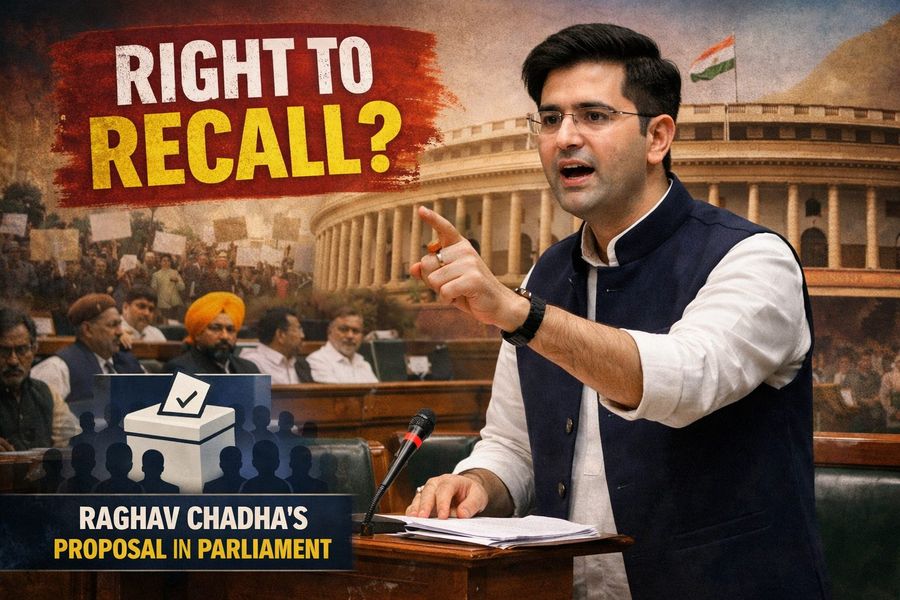
In a high-profile intervention during the Zero Hour in Parliament, Aam Aadmi Party’s Rajya Sabha member Raghav Chadha put forward a thought-provoking proposal that has sparked fresh debate on electoral accountability in India — the Right to Recall for elected representatives.
Under the current system, voters elect their Member of Parliament (MP) or Member of Legislative Assembly (MLA) once every five years. If citizens feel disappointed with the performance of their representatives, the only formal recourse they have is to wait until the next election cycle. Chadha challenged this status quo, arguing that a five-year wait can be excessively long if a representative fails to deliver on promises or neglects duties.
What Is the Right to Recall?
The Right to Recall refers to a legal mechanism that allows voters to remove an elected official from office before their term expires. Advocates describe it as a form of “voter insurance” — a democratic safety net that holds representatives continuously accountable. Under such systems, a recall process is triggered if a sufficient number of registered voters in a constituency sign a petition expressing no confidence in the representative.
Globally, recall laws exist in several democracies, and at local levels within India — such as in some gram panchayats — citizens already have limited recall rights. Chadha pointed to these examples to underline that the idea is not alien to democratic practice, and can help correct voter mistakes if an electorate ends up electing a non-performing lawmaker.
Why Is It Being Proposed?
According to Chadha, democracy should not end the moment votes are cast at the polling booth. “If voters can hire a neta, they should also have a way to fire one,” he said in a post on social media emphasising voter empowerment. He argued that introducing recall would compel political parties to field better candidates and pressure incumbents to work actively for their constituents throughout their term.
Among the safeguards discussed to prevent misuse are:
- A minimum performance period (for example, 18 months) before a recall petition can be initiated;
- A high threshold of verified voter support to trigger a recall process;
- Final removal only after a majority vote in a recall election.
Complications and Criticisms
While the idea has its supporters, it has also drawn criticism. Skeptics argue that frequent recall actions could lead to political instability, greater election-related expenses, and constant electoral campaigns that distract representatives from governance. Some members of Parliament have cautioned that the process could be misused by political rivals or special interest groups to topple serving representatives for narrow gains.
India’s Constitution currently provides mechanisms for holding officials accountable — such as motions of no confidence against governments and impeachment procedures — but lacks a direct recall provision for individual legislators. Introducing such a mechanism would require careful legal drafting and broad political consensus.
Looking Ahead
The Right to Recall debate has not yet translated into formal legislation, but Chadha’s proposal puts a spotlight on issues of accountability, voter rights, and democratic reform. As discussions continue in Parliament, the idea is likely to remain a talking point among political thinkers, civic groups, and ordinary voters who seek more direct control over their elected representatives.