Java & Kotlin Lead the Charge in Cloud-Native Backend Development
Java and Kotlin are redefining cloud-native backend development in 2025. With Spring Boot 3 and containerized microservices, both languages deliver scalable, secure, and high-performance solutions. Java ensures enterprise stability, while Kotlin boosts developer productivity—together powering the next generation of modern, cloud-ready applications worldwide.
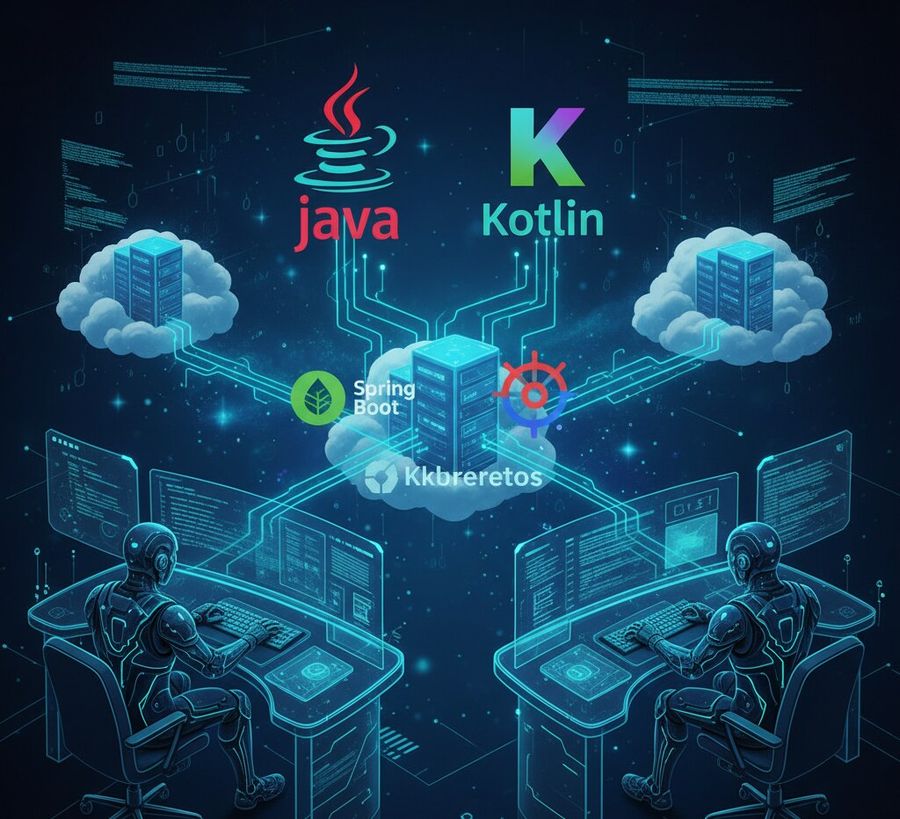
The year 2025 marks a new era in backend development as Java and Kotlin emerge as leading languages for building cloud-native applications. With the latest advancements in Spring Boot 3, Docker, and Kubernetes, developers are creating scalable, secure, and high-performance systems optimized for the cloud.
For decades, Java has powered enterprise software with unmatched stability and performance. Its modern updates, including Java 17+ and Project Loom’s virtual threads, now make it perfectly suited for microservice architectures. These features enable developers to handle massive concurrency efficiently while maintaining Java’s reliability and compatibility. Paired with Spring Boot 3, Java provides seamless integration with cloud platforms like AWS, Azure, and Google Cloud.
Kotlin, on the other hand, has evolved from a mobile-first language to a major player in cloud and backend systems. Its concise syntax, type safety, and coroutine-based concurrency allow teams to write cleaner, faster, and more maintainable code. As a fully JVM-compatible language, Kotlin runs side by side with Java — allowing developers to enhance legacy applications or build modern cloud services from scratch.
The rise of microservices and containerization has accelerated the adoption of both languages. Frameworks like Spring Boot, Micronaut, and Quarkus simplify building modular, lightweight services that can scale effortlessly in distributed environments. With Docker and Kubernetes, deploying Java or Kotlin applications across cloud infrastructure has never been easier or more efficient.
In 2025, leading organizations are increasingly adopting Kotlin + Spring Boot 3 for backend services to achieve faster release cycles and improved developer productivity. Kotlin’s modern features, combined with Java’s maturity, form a reliable and flexible stack for cloud-native ecosystems. This combination is particularly effective for enterprises seeking to transition from monolithic systems to microservice-based architectures.
Security and observability remain key priorities in this shift. Spring Security 6 brings advanced authentication and authorization using OAuth 2.1 and JWT, while Micrometer and OpenTelemetry provide real-time monitoring and performance insights. These integrations help ensure that cloud-native systems built with Java or Kotlin are secure, transparent, and resilient.
Experts predict that by the end of 2025, most JVM-based cloud projects will leverage both Java and Kotlin, blending enterprise reliability with modern development efficiency. The ongoing evolution of these languages aligns perfectly with the global move toward scalable, maintainable, and high-performing backend systems.