Delhi Rings Up Security: 450+ CCTVs Deployed for Round-the-Clock VVIP Surveillance
"In a major security boost ahead of the high-stakes BRICS Summit, Delhi has unveiled a comprehensive surveillance network, deploying over 450 state-of-the-art CCTV cameras along key routes to ensure 24x7 VVIP protection. The live feeds will be closely monitored by police to detect and prevent potential security threats, guaranteeing a
It was a sweltering summer evening in New Delhi, the air thick with the smell of street food and the cacophony of horns honking in every direction. The city was abuzz with activity, its residents going about their daily lives as if nothing was amiss. But amidst the chaos, a sense of unease hung in the air. For in just a few short days, the city would play host to some of the world's most powerful leaders, the BRICS Summit being the most high-profile event on the horizon. And with that came the knowledge that Delhi's security apparatus would be stretched to its limits.
As I walked along the city's famous Rajpath, I couldn't help but notice the skeletal frames of CCTV cameras sprouting up from lamp posts and buildings. It was a sight that had become all too familiar in recent years, the city's authorities seemingly obsessed with surveillance. But this was no ordinary CCTV installation - these were the latest generation of state-of-the-art cameras, boasting high-definition resolution and advanced facial recognition capabilities. And there were a lot of them - over 450, strategically deployed along key routes to ensure round-the-clock VVIP protection.
The idea, according to Delhi Police officials, was to create a seamless web of surveillance that would allow them to detect and prevent potential security threats in real-time. Live feeds from the cameras would be monitored by trained personnel, who would be able to zoom in on suspicious activity and alert the authorities in a matter of seconds. It was a bold move, one that was designed to reassure both the visiting dignitaries and the city's residents that Delhi was a safe haven.
But not everyone was convinced. Civil liberties activists had long been vocal about the city's surveillance obsession, arguing that it was an affront to individual freedom and a slippery slope towards a dystopian future. "This is just another example of the government's over-reliance on technology to solve its security problems," said a spokesperson for the Delhi chapter of the Human Rights Watch. "We need to be careful not to sacrifice our fundamental rights in the name of security."
As I spoke to officials from the Delhi Police, it became clear that the BRICS Summit was just the tip of the iceberg. This was part of a larger strategy to create a permanent surveillance network that would be used to monitor high-risk areas and events across the city. It was a massive undertaking, one that had been in the works for months, with multiple agencies working together to ensure its success.
But what about the cost? The estimated budget for the CCTV installation was a staggering 200 crores, a sum that many argued was better spent on more pressing issues like infrastructure development and social welfare programs. "We need to prioritize our spending," said a senior government official, who wished to remain anonymous. "This is just a Band-Aid solution to a much larger problem."
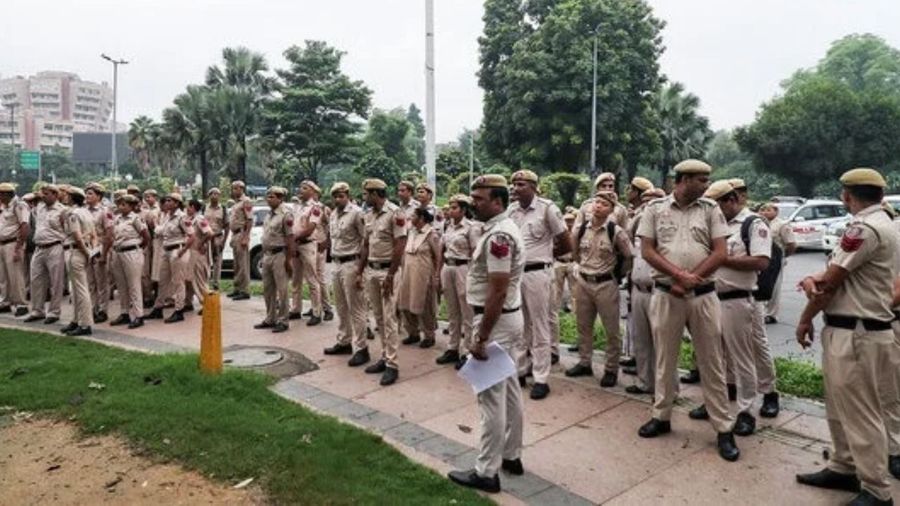
As the countdown to the BRICS Summit began, the city was transformed into a fortress. The streets were lined with police personnel, their faces stern and unyielding. The air was thick with tension, the sense of unease palpable. It was a city on high alert, its residents holding their breath as they waited for the dignitaries to arrive.
Also Read

स्टीअर्ट नामकल डीसी बालिका शिक्षा योजना 2026: 18 एसटी छात्राएं सीआरएम विश्वविद्यालय में ज्वाइन क
नई दिल्ली: नेमडीसी बालिका शिक्षा योजना 2026 के तहत, 18 अनुसूचित जनजाति की छात्राओं ने चेन्नई में एसआरएम विश्वविद्यालय में जीएएनएम नर्सिंग अध्ययन शुरू किए हैं। इस योजना के तहत, छात्राओं को निजी संस्थानों में शिक्षा के लिए आर्थिक सहायता प्रदान की जा रही है। इस योजना के माध्यम से,
But what about the long-term implications of this massive surveillance effort? Would it truly make Delhi a safer city, or would it simply create a culture of fear and mistrust? Only time would tell.
---
DESCRIPTION2---
As the BRICS Summit drew to a close, Delhi breathed a collective sigh of relief. The dignitaries had departed, and the city was slowly returning to its normal rhythm. But the legacy of the massive CCTV installation remained, a testament to the city's commitment to VVIP protection. And as experts began to weigh in on the impact of this unprecedented surveillance effort, it became clear that the debate was far from over.
"It's a classic case of the 'security vs. liberty' dilemma," said Dr. Ravi Kant, a leading expert on surveillance and privacy. "The government is right to be concerned about security, but we need to be careful not to sacrifice our fundamental rights in the process." Dr. Kant pointed out that the surveillance network was not just about detecting and preventing threats, but also about creating a culture of fear and mistrust among the city's residents.
The economic implications of the CCTV installation were also significant. The estimated budget of 200 crores was a staggering sum, one that could have been better spent on more pressing issues like infrastructure development and social welfare programs. "This is just a waste of taxpayer money," said economist Dr. Kunal Purohit. "We need to prioritize our spending, and focus on issues that really matter to the city's residents."
But what about the impact on the city's residents? Would the massive surveillance effort create a culture of fear and mistrust, or would it genuinely make Delhi a safer city? The answer, according to Dr. Purnima Mankekar, a leading expert on urban studies, lay in the city's social fabric. "Delhi is a city of contradictions," she said. "We have a rich cultural heritage, but we also have deep social and economic inequalities. This surveillance effort will only exacerbate these inequalities, and create a culture of fear and mistrust among the city's residents."
As the city looked to the future, one thing was clear: the debate over surveillance and security was far from over. The BRICS Summit had marked a turning point in Delhi's history, one that would have far-reaching implications for the city's residents and its infrastructure. The question was, what would be the long-term cost of this massive surveillance effort, and would it truly make Delhi a safer city? Only time would tell.