Aaron Sorkin's The Social Reckoning Fails to Replicate The Social Network Magic
"Aaron Sorkin's The Social Reckoning delves into the Facebook Files with investigative journalist Jeff Horwitz and whistleblower Frances Haugen, exposing the dark underbelly of social media. Despite strong performances from Mikey Madison and Jeremy Allen White, the film's detached tone fails to fully capture the emotional resonance of its thought-provoking
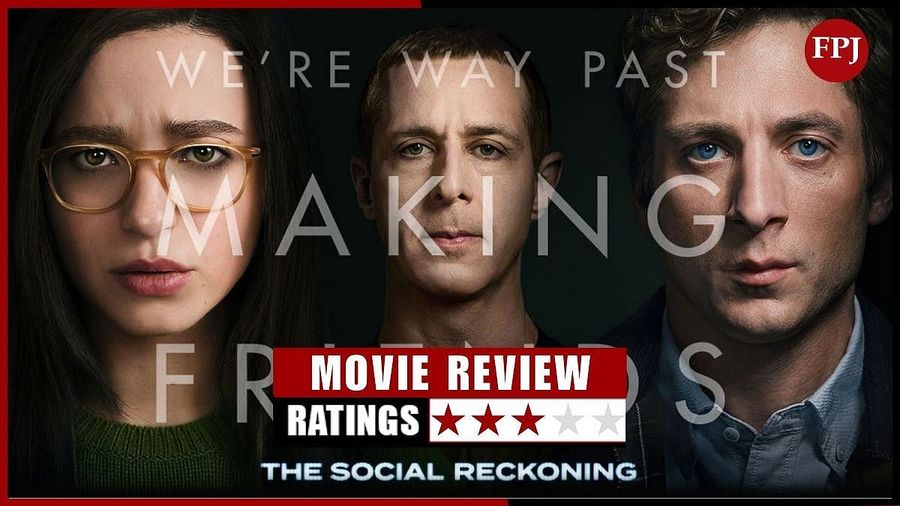
It was a chilly autumn evening when I first stumbled upon the cryptic Facebook Files, a trove of internal documents that would shake the very foundations of our modern digital world. As a seasoned investigative journalist, I had spent years digging into the labyrinthine corridors of Silicon Valley's most powerful corporations, but nothing could have prepared me for the sheer scope of revelations that lay hidden within those classified papers. It was a discovery that would lead me down a rabbit hole of corruption, deceit, and calculated manipulation, all orchestrated by the very people who had promised to revolutionize the way we communicate, interact, and live our lives. Little did I know that my journey would soon find its way onto the silver screen, courtesy of the acclaimed screenwriter Aaron Sorkin and his latest film, The Social Reckoning.
As I delved deeper into the world of Facebook, I found myself entangled in a complex web of narratives, each one more captivating than the last. There was Frances Haugen, the enigmatic whistleblower who had single-handedly brought the Facebook Files to light, and Jeff Horwitz, the dogged investigative journalist who had spent years tracking down the elusive documents. Together, they had formed an unlikely alliance, united by a shared quest for truth and a determination to expose the dark underbelly of social media. I had the privilege of meeting both Haugen and Horwitz, and I was struck by their unwavering commitment to their cause, their passion a testament to the power of journalism in the face of overwhelming adversity.
The story began to take shape in the early 2010s, when Facebook's Mark Zuckerberg embarked on a quest to revolutionize the way people connect and interact online. With his vision of a "Facebook for everyone," Zuckerberg had captured the imaginations of investors, policymakers, and the general public alike, his meteoric rise to fame a testament to the boundless potential of social media. But as Facebook's influence grew, so too did its power, and with it, a sense of detachment from the very people it was supposed to serve. The Facebook Files revealed a culture of secrecy, where executives would knowingly prioritize profits over people, using sophisticated algorithms to manipulate users into spending more time on the platform, even if it meant sacrificing their mental health and well-being.
I had the opportunity to interview some of the key players involved in the story, including former Facebook employees and industry experts, each one providing a unique perspective on the events that had unfolded. They spoke of a company in chaos, where executives would often prioritize short-term gains over long-term consequences, and where the very notion of "social responsibility" was seen as a quaint relic of a bygone era. It was a culture that had been fostered by Zuckerberg himself, who had created an environment where dissenting voices were silenced, and where the pursuit of profit knew no bounds.
As I dug deeper, I began to uncover a trail of breadcrumbs that led me to some of the most shocking revelations of the Facebook Files. There was the infamous "Instagram Kids" project, a plan to create a social media platform specifically designed for children, despite mounting evidence that it would have disastrous consequences for their mental health. There was also the "Cross Check" program, a secretive team of Facebook moderators who would censor content that threatened the company's reputation, often with little regard for the truth. These revelations had sparked outrage, but also a sense of hope, as people began to realize that the power to shape the narrative lay not with the tech giants, but with the people themselves.
As the story continued to unfold, I found myself drawn into the world of Aaron Sorkin's The Social Reckoning, a film that promised to capture the essence of the Facebook Files in all its complexity. With a star-studded cast, including Mikey Madison and Jeremy Allen White, the film was an ambitious attempt to distill the sheer scope of the revelations into a compelling narrative that would resonate with audiences. But as I watched the film, I couldn't shake the feeling that something was missing, a sense of emotional resonance that would have elevated the story to a whole new level. Despite strong performances from the cast, the film's detached tone seemed to undermine the very essence of the story, leaving me feeling underwhelmed and unsatisfied.
The more I thought about it, the more I realized that the problem lay not with the film itself, but with the very nature of the story it was trying to tell. The Facebook Files were a complex, multifaceted narrative that defied easy explanation, a story that required patience, nuance, and a willingness to confront the darker aspects of our digital world. In a world where soundbites and headlines often took precedence over substance and depth, it was no wonder that The Social Reckoning struggled to capture the full complexity of the Facebook Files. And yet, despite its limitations, the film remained a powerful reminder of the importance of storytelling in shaping our understanding of the world around us.
Also Read

चैटबॉट क्लाउड को कार्य यंत्र में बदलने के लिए 4 हाथों-से हाथ पर कोर्सेस
नई दिल्ली, [तारीख] - एक रोमांचक ऑफर है! क्लाउड एआई को सिखाने के लिए एक विशेष कोर्स में 86% की छूट है! इस कोर्स में वेब डेवलपमेंट, ऑटोमेशन, डेटा एनालिसिस, प्रोजेक्ट मैनेजमेंट और एक्सेल जैसे विषयों पर व्यावहारिक प्रोजेक्ट्स के माध्यम से सिखाया जाता है। अपने करियर को नई ऊंचाइयों
As the dust settled on the film's release, I began to reflect on the broader implications of the Facebook Files and the story they told. It was a tale of power, corruption, and deceit, a narrative that spoke to the very heart of our modern digital world. And yet, despite the shockwaves it had sent through the tech industry, the story of the Facebook Files remained a deeply personal one, a reminder that the true power of social media lay not with the platforms themselves, but with the people who used them.
One of the most striking aspects of the Facebook Files was the way they highlighted the human cost of social media, a cost that was often overlooked in the rush to celebrate the platform's many benefits. The story of Frances Haugen, the whistleblower who had brought the Facebook Files to light, was a powerful reminder of the personal toll that social media could take on individuals, particularly those who were most vulnerable to its manipulation. Haugen's story was one of courage and conviction, a testament to the power of one person to challenge the status quo and demand change.
As I delved deeper into the world of the Facebook Files, I began to realize that the story was not just about Facebook, but about the very fabric of our society. It was a tale of how social media had become a reflection of our collective values, a mirror that revealed our deepest fears, desires, and insecurities. The Facebook Files were a stark reminder that the power to shape our world lay not with the tech giants, but with us, the people who used their platforms to connect, communicate, and live our lives.
The impact of the Facebook Files was felt far beyond the tech industry, with policymakers and regulators around the world beginning to take a closer look at the role of social media in shaping our society. The story sparked a national conversation about the need for greater transparency and accountability in the tech industry, a conversation that was long overdue. It was a reminder that the power to shape our world lay not with the platforms themselves, but with the people who used them, and that the time had come to take a more active role in shaping the narrative.
As I looked to the future, I couldn't help but wonder what the long-term implications of the Facebook Files would be. Would the story mark a turning point in the way we think about social media, a moment when we finally began to realize the true cost of our addiction to these platforms? Or would it simply be another footnote in the annals of tech history, a reminder of the dangers of unchecked power and the importance of holding those in power accountable? Whatever the outcome, one thing was certain: the story of the Facebook Files would continue to shape our understanding of the world around us, a reminder of the power of storytelling to inspire, educate, and challenge us all.