Q2 GDP Hits Six-Quarter High, Igniting India's Economic Growth
The economy grew faster than expected, with second-quarter growth surpassing the forecasted 7.3%. This strong expansion was driven by a 9.2% increase in services and a 9.1% rebound in manufacturing.
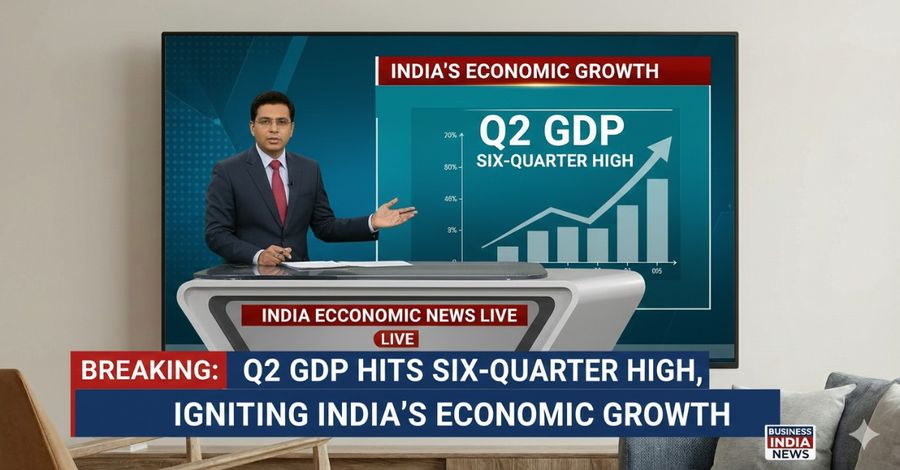
India’s economy has posted an impressive performance in the second quarter of the fiscal year, registering a growth rate that exceeded analyst expectations and marked the strongest pace in six quarters. The country’s gross domestic product (GDP) expanded at a surprising 7.8%, surpassing earlier forecasts which had anticipated a 7.3% growth rate. This robust growth reflects a sustained recovery momentum fueled by dynamic activity in key sectors including services and manufacturing.
The latest data, released by the Ministry of Statistics and Programmed Implementation, underscores India’s ability to maintain rapid economic expansion despite global uncertainties and ongoing inflationary pressures. The 7.8% GDP growth for Q2 marks a significant acceleration from the previous quarter’s 6.1%, reaffirming the resilience of the Indian economy.
A major contributor to this growth surge was the services sector, which recorded a remarkable 9.2% increase. This sector, encompassing trade, hospitality, transport, communication, and financial services, benefited from a combination of rising domestic demand and improved consumer confidence. The revival in services aligns with the easing of pandemic-related disruptions and increased mobility, bolstering consumption and business activities.
Manufacturing, another key driver of economic performance, also posted a strong rebound with a 9.1% growth rate. This upswing signals strengthening industrial output and investment, supported by government incentives aimed at boosting "Make in India" initiatives. Manufacturing growth bodes well for employment generation and export potential, important factors for the broader economic recovery.
Agriculture, meanwhile, demonstrated steady but moderate growth, reflecting the sector’s relatively stable performance amid variable weather conditions and supply chain challenges. The farm sector’s output was consistent with expectations, providing a solid but not extraordinary contribution to overall GDP results.
The GDP data highlights a diverse pattern of growth that suggests India is navigating complex economic headwinds with agility. Factors such as ongoing infrastructure development, digital transformation, and domestic consumption have played notable roles in underpinning the economy’s expansion momentum.
Analysts monitoring the Indian economy view this Q2 performance as a positive indicator for the remainder of the fiscal year, although challenges such as rising global commodity prices and geopolitical tensions remain potential risks to sustained growth. The Reserve Bank of India’s monetary policy stance will be critical in managing inflation while supporting economic activity.
In conclusion, the second quarter GDP figures reveal that India’s economy is surging at its fastest clip since late 2022, driven by vigorous gains in services and manufacturing sectors. This growth trajectory provides a boost to market sentiment and reinforces the outlook that India is on track to maintain its position as one of the fastest-growing major economies worldwide amid a complex global environment.