OID 2026 Focuses on Tech Partnerships for Next-Gen Industrial City Development
Open Innovation Day 2026 convened leaders to drive next-gen industry in Ho Chi Minh City, focusing on AI, green energy, and the low-altitude economy. Policymakers emphasized bridging research to market, supported by a VND 500 billion venture fund and strategic partnerships.
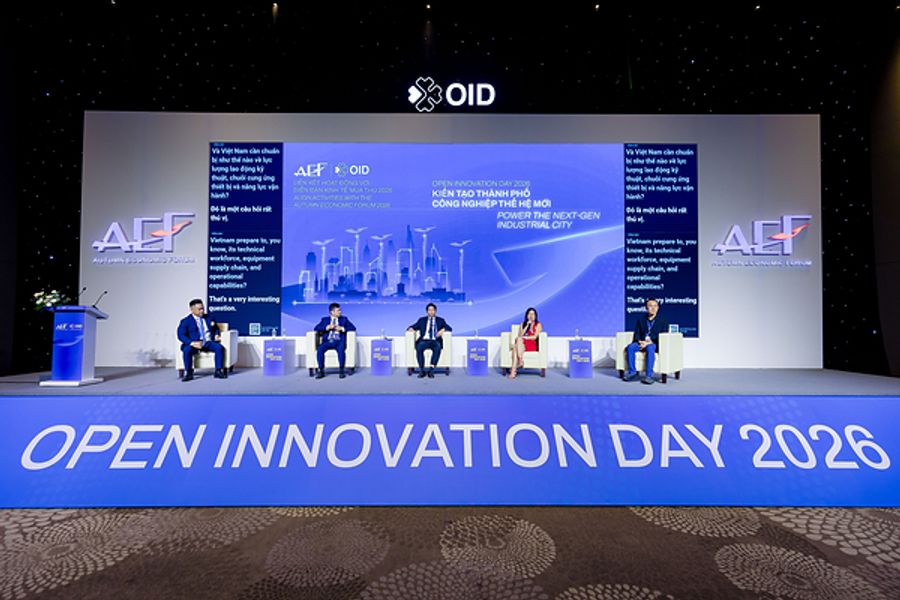
Open Innovation Day 2026 recently convened a significant gathering of industry leaders, policymakers, and technology innovators in Ho Chi Minh City, marking a concerted push toward establishing a next-generation industrial city. The central focus of the day was the strategic integration of cutting-edge technologies, specifically artificial intelligence, sustainable green energy solutions, and the burgeoning low-altitude economy, into the region's industrial framework. This event was not merely a showcase but a platform designed to accelerate the practical application of research into viable market solutions.
The background context for this initiative lies in the broader economic ambitions of Ho Chi Minh City to transition from traditional manufacturing to a high-tech, knowledge-based economy. Recognizing the gap between academic research and commercial viability, policymakers underscored the critical need to bridge this divide, fostering an ecosystem where innovation directly translates into industrial growth and job creation.
To catalyze this transition, the event highlighted the establishment of a substantial VND 500 billion venture fund, specifically earmarked to support high-potential, next-gen industrial projects. Furthermore, the discussions emphasized the necessity of forging robust strategic partnerships between private enterprises, research institutions, and governmental bodies. The anticipated impact of these concerted efforts is a significant leap in industrial modernization, positioning the city as a regional hub for sustainable and technologically advanced manufacturing well into the future.
Also Read

इजरायल में ट्रंप पार्टी की हार पर प्रतिक्रियाएं सामने आईं
ट्रम्प की मिडटर्म हार के बीच, मुजतबा खामेनेई ने ईरान पर हमले की स्थिति में कड़ी चेतावनी दी है। अमेरिकी राष्ट्रपति ने ईरान-जंग के परिणाम पर टिप्पणी की, जिससे भू-राजनीतिक तनाव बना हुआ है।
The significance of the OID 2026 gathering lies in its tangible pivot from theoretical discussion to actionable economic strategy for Ho Chi Minh City. By explicitly focusing on AI, green energy, and the low-altitude economy, the city is positioning itself not merely as a manufacturing hub, but as a sophisticated, future-ready industrial ecosystem. The commitment to bridging research and market, backed by the VND 500 billion venture fund, signals a deliberate governmental effort to de-risk innovation and accelerate commercialization within local enterprises. This financial mechanism is designed to move promising technologies from laboratory prototypes into scalable, market-ready solutions, directly addressing the historical gap between academic output and industrial uptake.
The potential impact of these technological partnerships is multifaceted. Successful integration of green energy solutions could significantly enhance the city's sustainability profile while simultaneously reducing long-term operational costs for industries. The low-altitude economy, for instance, promises new logistics and service delivery models, potentially streamlining urban operations and improving supply chain efficiency. For the regional economy, this push towards high-tech specialization could attract further foreign direct investment focused on advanced manufacturing and digital infrastructure, diversifying the economic base beyond traditional sectors.
Looking ahead, the critical factors to monitor involve the execution timeline of the venture fund deployment and the concrete milestones achieved through the established strategic partnerships. Success will be measured not just by announcements, but by the rate at which pilot projects transition into full-scale industrial deployments across the designated sectors. Furthermore, tracking policy implementation—specifically how regulatory frameworks adapt to the unique demands of AI integration and low-altitude operations—will reveal the true pace of this industrial transformation. The next reporting cycle will need to focus on measurable adoption rates rather than partnership agreements alone.