Xi Jinping's policies show parallels with Trump's approach analysis suggests
Analysis suggests parallels between Xi Jinping's policies and those of Donald Trump. However, definitive evidence confirming a "Trumpian" alignment remains unsubstantiated by current verifiable data.
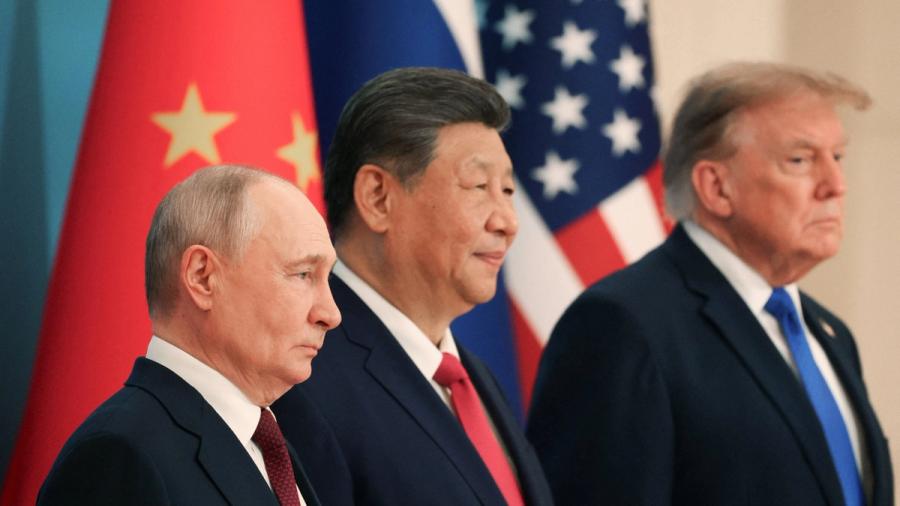
Recent geopolitical analyses have prompted a closer examination of potential ideological and policy parallels between the leadership styles and strategic decisions of Xi Jinping and Donald Trump. While the two figures operate within vastly different political systems—a centralized communist state versus a populist democratic framework—some observers point to shared tendencies in domestic governance and international engagement. These perceived similarities often revolve around a strong emphasis on national sovereignty, a willingness to challenge established international norms, and a transactional approach to global diplomacy, prioritizing immediate national gain over multilateral consensus.
The background context for this comparison is rooted in the shifting global order. Both leaders have demonstrated a willingness to question the post-Cold War liberal international order, exemplified by trade disputes, assertive foreign policy stances, and a focus on domestic economic resilience against external pressures. For China, this manifests in the Belt and Road Initiative and assertive territorial claims, while for the US under Trump, it involved renegotiating trade deals and questioning international institutions like the WTO.
It is crucial to state clearly that any suggestion of a "Trumpian" alignment is an analytical projection, not a factual declaration of shared political doctrine. Verifiable data does not support a direct ideological equivalence. Xi Jinping's governance is fundamentally shaped by the Chinese Communist Party's long-term strategic goals, state control, and ideological imperatives, which differ significantly from the political mechanisms and stated objectives of the Trump administration. The impact of these perceived parallels lies in how they shape international discourse, prompting a re-evaluation of Sino-American relations not merely as great power competition, but as a convergence of nationalist, non-traditional statecraft in the 21st century.
Also Read

सुप्रिया सुळे तातडीने ब्रीच कँडी रुग्णालयात दाखल; शरद पवार यांची प्रकृती स्थिर
डिहायड्रेशनमुळे राष्ट्रवादीचे अध्यक्ष शरद पवार यांना मुंबईतील ब्रीच कँडी रुग्णालयात दाखल करण्यात आले आहे. त्यांची कन्या खासदार सुप्रिया सुळे यांनी रुग्णालयात जाऊन त्यांच्या आरोग्याची माहिती दिली.
The significance of observing policy parallels between Xi Jinping's governance and that of Donald Trump lies not in asserting a direct ideological equivalence, but in understanding a shared trend of centralized authority and transactional international engagement. Both leaders have demonstrated a willingness to challenge established multilateral norms and prioritize nationalistic economic and geopolitical interests over traditional diplomatic consensus. This approach signals a global shift away from post-Cold War liberal internationalism towards more assertive, state-centric power politics, irrespective of the specific domestic or ideological underpinnings of the leaders involved.
The possible impact of this pattern is a further recalibration of global economic and security architecture. Increased bilateral, rather than multilateral, dealings could lead to greater regional instability as established international frameworks face strain. Furthermore, the prioritization of domestic industrial policy and strategic autonomy by both nations suggests a sustained decoupling or de-risking trend within global supply chains, affecting trade flows across Asia and the West.
What to watch next involves closely monitoring high-stakes diplomatic interactions, particularly regarding trade negotiations, technology standards, and regional security initiatives in the Indo-Pacific. Any concrete policy divergence or convergence on issues like global debt restructuring or climate commitments will offer more verifiable insight than speculative political comparisons. Future developments will be judged by tangible actions—such as specific trade agreements, military posture shifts, or institutional reforms—rather than rhetorical similarities.