"India Must Update Its Nuclear Doctrine"
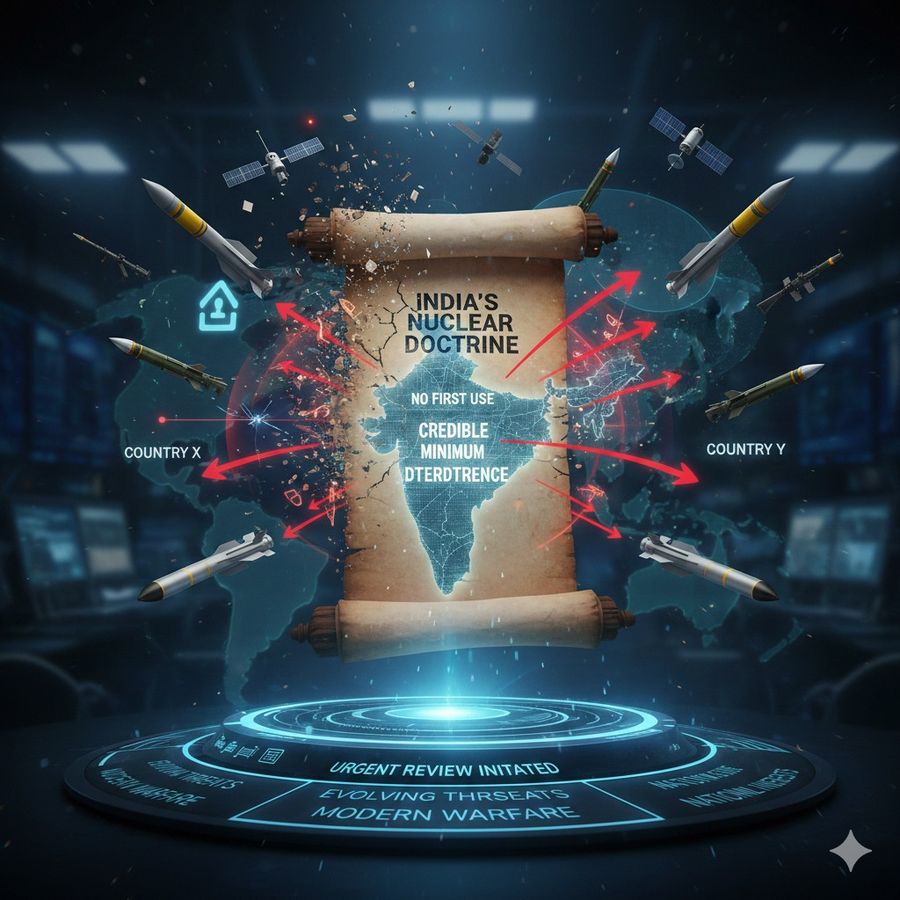
India's 22-year-old nuclear doctrine, centered on 'no first use' and 'credible minimum deterrence', is under urgent review due to expanding arsenals of neighboring countries. The evolving nature of modern warfare calls for an updated policy to effectively protect national interests in the face of new security challenges.
**Title: View: India, Revise the Nuclear Doctrine**
India's nuclear doctrine, established in 2003, has long been characterized by a commitment to 'no first use' (NFU) and a strategy of 'credible minimum deterrence.' As regional security dynamics shift and neighboring countries expand their nuclear arsenals, there is growing discourse around the need for a comprehensive revision of India's nuclear policy.
The current doctrine was framed in a different geopolitical context, primarily addressing threats from Pakistan and China. However, with recent developments—such as significant advancements in missile technology and nuclear capabilities in both of these countries—the efficacy of the NFU posture is increasingly questioned. Critics argue that changing military doctrines and the emergence of hybrid warfare tactics could undermine the deterrence value of India's nuclear arsenal.
The idea of NFU has been a cornerstone of India's nuclear strategy, aimed at promoting stability and avoiding escalation of conflict. However, as adversaries modernize their arsenals and develop their own strategies, the assumptions underlying NFU may no longer hold true. Analysts are suggesting that a review of these principles could better align India's nuclear posture with contemporary threats.
Moreover, the evolving landscape of warfare, characterized by cyber capabilities and asymmetric tactics, necessitates a reassessment of how nuclear weapons integrate into broader national defense strategies. The Indian military is adapting to these changes, incorporating technological advancements and new operational concepts. A revision of the nuclear doctrine might not only ensure that deterrence remains effective but also that it addresses new vulnerabilities arising from modernization and hybrid threats.
Another factor driving the discussion is the increasing calls from various quarters, including defense analysts and strategic communities, for a more flexible response mechanism. Critics of the current doctrine argue that retaining NFU limits India's operational response options. They contend that acknowledging the possibility of a first strike is essential for ensuring strategic ambiguity and creating a more robust deterrent against potential aggressors.
Internationally, the discourse on nuclear strategy is also evolving. Nations are increasingly engaging in dialogues about arms control, non-proliferation, and disarmament. As global dynamics shift, India's nuclear policy will face pressure not only from regional adversaries but also from the expectations of the international community regarding responsible nuclear stewardship.
The potential revision of India's nuclear doctrine is not without its challenges. It involves careful consideration of domestic political implications, regional stability, and the impact on peace initiatives. Any changes would require a robust internal consensus to ensure that the policy shifts do not provoke regional arms races or destabilizing escalations between nuclear-armed neighbors.
In conclusion, while India’s 22-year-old nuclear doctrine has served its purpose in a rapidly changing security environment, the imperative for a critical review is evident. Adapting to the evolution of warfare and the changing military capabilities of neighboring countries could play a crucial role in safeguarding national interests and ensuring regional stability. A nuanced approach, balancing the imperatives of deterrence with responsible management of nuclear capabilities, may not only enhance India's security but also foster greater strategic stability in South Asia.