India Police Autonomy Faces Challenges Amid Political and Ideological Pressures
An article on Hill Post questions the decline of India's constitutional and statutory public institutions. The piece prompts a discussion on reclaiming the police force from political and ideological influence.
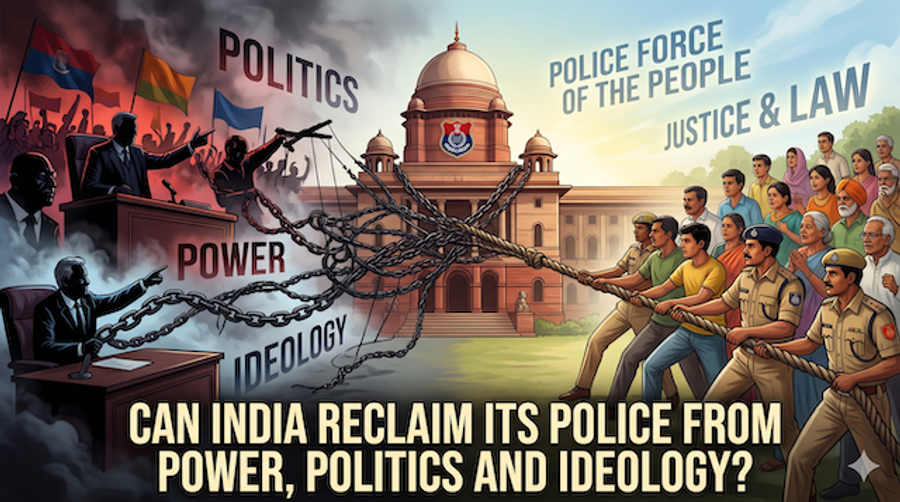
The integrity of India's constitutional and statutory public institutions is facing a growing challenge, prompting serious questions about the autonomy of key bodies, particularly the police force. A recent analysis published by Hill Post has brought into sharp focus the increasing encroachment of political and ideological influences upon law enforcement agencies across various states. This trend raises fundamental concerns about the impartiality required of a state police force, which is meant to serve all citizens without favour or prejudice.
Historically, the Indian police structure was envisioned as a neutral apparatus of the state, bound by the rule of law rather than partisan interests. However, reports from civil society groups and legal observers indicate instances where political directives appear to supersede standard operating procedures. This dynamic compromises the very foundation of democratic policing, transforming what should be an impartial guardian of law and order into a potential instrument of political expediency.
The impact of this politicisation extends beyond procedural lapses; it erodes public trust, a vital component of effective governance. When citizens perceive the police as aligned with ruling factions rather than with justice, the social contract weakens, making crime control and dispute resolution significantly more difficult. Reclaiming the police from such external pressures is not merely an administrative reform but a critical imperative for strengthening India's democratic fabric.
The discussion now centers on actionable steps—legislative safeguards, institutional strengthening, and ensuring robust internal accountability mechanisms—to insulate the police from the volatile currents of power and ideology, thereby reaffirming their constitutional mandate to serve the public interest above all else.
Also Read
रामायण 10वें दिन 684 करोड़ पार, दूसरे शनिवार को मजबूत कमाई
'रामायण' ने 10वें दिन भी शानदार कमाई करते हुए बॉक्स ऑफिस पर 684 करोड़ का आंकड़ा पार किया। कर्नाटक में यह दूसरी बॉलीवुड फिल्म बनी जिसने 100 करोड़ का आंकड़ा छुआ।
The significance of this ongoing institutional challenge lies in the bedrock of India's democratic structure. A police force subservient to political expediency or ideological agendas undermines the rule of law, transforming it from a protector of citizens into an instrument of power. The constitutional mandate of the police is impartiality and service to all, irrespective of caste, religion, or political affiliation. When this neutrality erodes, the state's legitimacy in the eyes of its populace diminishes, creating fissures within the social contract that are difficult to mend.
The possible impact extends beyond individual cases of misconduct; it affects the overall governance quality. Weakened institutional integrity can lead to a rise in impunity, discouraging genuine civic participation and fostering an environment where extra-legal solutions become normalized. For a nation striving for inclusive growth and global standing, the perceived fairness of its law enforcement apparatus is critical to maintaining investor confidence and international trust.
Moving forward, sustained attention must be paid to the implementation and strengthening of existing oversight mechanisms, such as internal vigilance bodies and judicial review processes. Furthermore, structural reforms focusing on police training, professionalization, and ensuring operational autonomy from immediate political pressure are crucial. What to watch next is not merely high-profile arrests, but rather the consistent, verifiable adoption of systemic changes within state police departments—measurable improvements in transparency, accountability mechanisms, and the empowerment of independent civilian oversight bodies across diverse states.