14 States Agree to Raise Judicial Officers Retirement Age to 62
The Supreme Court acknowledged 14 states' agreement to raise the district judicial officer retirement age from 60 to 62. The court declined urgent individual pleas filed by retiring judges regarding this change.
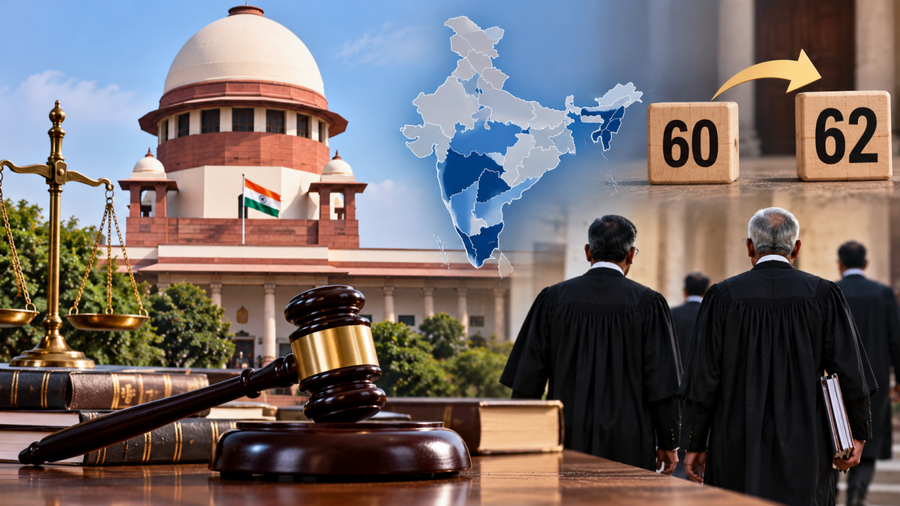
The Supreme Court recently acknowledged an agreement reached by fourteen states to increase the retirement age for district judicial officers from 60 to 62. This development follows ongoing discussions regarding the operational needs of the judiciary and the service conditions of judicial personnel across the country. The court noted the collective decision of these states, recognizing the administrative consensus on the matter.
This proposed increase comes against a backdrop of increasing judicial workload and the need to retain experienced personnel within the district judiciary for longer periods. The current retirement age of 60 has been a long-standing feature of service rules, but many state governments have been exploring reforms to address staffing gaps and ensure continuity in judicial administration at the local level.
Significantly, the Supreme Court declined to entertain urgent individual pleas filed by judges who are due to retire under the existing age criteria. The court's stance appears to uphold the validity of the state-level agreements while maintaining procedural boundaries regarding individual grievances against established service rules.
The impact of this move is expected to be felt across the judiciary in these fourteen states, potentially stabilizing the cadre strength of district judges. However, the differing status of the remaining states suggests that a uniform national policy has yet to be established, leaving a patchwork of service rules across the country for the time being.
Also Read

गुवाहाटी होटल शूटआउट: 5 की मौत, एक महिला शामिल; शव मिले
गुवाहाटी के एक होटल में हुई गोलीबारी में कम से कम छह लोगों की मौत हो गई, जिनमें एक महिला भी शामिल है। असम पुलिस इस घटना की जांच कर रही है, जिसका एक कारण 'होटल का लीज' विवाद बताया जा रहा है।
The agreement reached by fourteen states to elevate the retirement age for district judicial officers from sixty to sixty-two carries significant implications for the judiciary's operational capacity and institutional stability. This move addresses a persistent administrative challenge related to judicial manpower, potentially ensuring a more experienced and consistent pool of judicial personnel within the state legal framework. The increased tenure allows for greater institutional memory to be retained within the district courts, which are the bedrock of grassroots justice delivery across the nation.
The potential impact extends beyond mere administrative adjustments; it touches upon judicial service continuity. A higher retirement age can mitigate the immediate strain on judicial recruitment and training infrastructure, allowing states a longer window to onboard and acclimatize new officers. However, the successful implementation across these fourteen jurisdictions will require clear guidelines regarding the transition period and the integration of these age changes with existing service rules.
Moving forward, the key focus must be on the uniform and transparent execution of this agreement across all fourteen participating states. It remains to be seen how this state-level consensus will influence the broader national policy regarding judicial retirement ages, particularly in light of the Supreme Court's decision to not entertain urgent individual pleas from retiring judges.
Observers will closely monitor the subsequent notifications issued by the respective state judicial departments detailing the exact effective dates and procedural requirements for the age revision. Furthermore, the trajectory of similar discussions in the remaining states, and any potential dialogue between the judiciary and the Union government on standardized service conditions, will dictate the long-term scope of this development.