Philippines accuses Chinese warship of ramming its vessel in South China Sea
A tense maritime standoff has erupted in the South China Sea after a Philippine vessel allegedly disregarded China's warnings and deliberately changed course, narrowly avoiding a collision with a Chinese coast guard ship. According to a Chinese spokesperson, the Philippine vessel ignored repeated warnings before attempting to cut across the
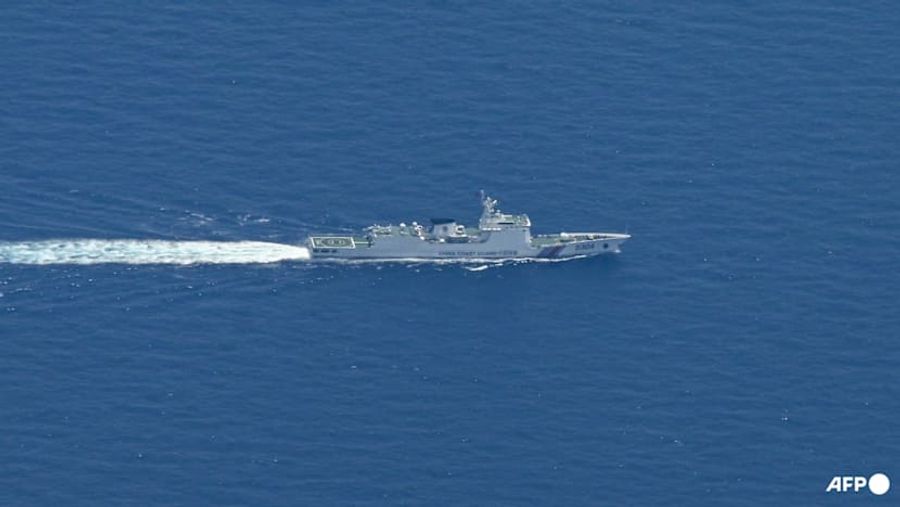
The South China Sea, a body of water that has become synonymous with territorial disputes and high-stakes naval confrontations, was the stage for a harrowing maritime standoff in the early hours of last week. The incident, which pitted a Philippine vessel against a Chinese warship, has left both nations trading accusations and raises fundamental questions about the rules of engagement in this increasingly contested region. As the world waits with bated breath to see how this standoff will unfold, the story of the events that led up to it is a complex one, marked by a delicate dance of power and politics.
It began on a typical Tuesday morning, when the Philippine vessel, a small but sturdy fishing boat, set sail from the port of Subic Bay in the province of Zambales. On board was a crew of seasoned fishermen, led by Captain Andres Reyes, a grizzled veteran of the South China Sea's treacherous waters. Their destination was the disputed Scarborough Shoal, a submerged reef that has long been a source of contention between the Philippines and China. The shoal, also known as Panatag Shoal, is a vital fishing ground for Filipino fishermen, but China claims it as part of its own territory.
As the Philippine vessel approached the shoal, it was confronted by a Chinese coast guard ship, which had been patrolling the area for weeks. The Chinese ship, which was armed with a pair of 30mm cannons and a helicopter, began to circle the Philippine vessel, warning it to leave the area. According to eyewitnesses, the Chinese ship's crew shouted through a loudspeaker, ordering the Filipino fishermen to turn back and abandon their fishing gear. But Captain Reyes, who had been fishing these waters for over two decades, was not about to back down.
Undeterred by the Chinese warnings, the Philippine vessel continued to sail towards the shoal, with the Chinese coast guard ship hot on its heels. The situation was fraught with tension, as both vessels narrowly avoided collision in the crowded waters. It was then that the Chinese ship allegedly rammed the Philippine vessel, causing significant damage to its hull. The incident has sparked outrage in the Philippines, with President Ferdinand Marcos Jr. condemning the Chinese actions as "aggressive and unacceptable".
The Chinese government, however, has denied any wrongdoing, claiming that the Philippine vessel had deliberately changed course and ignored repeated warnings before attempting to cut across the Chinese ship's path. According to a Chinese spokesperson, the Philippine vessel was "operating in a reckless and irresponsible manner" and had "put the safety of both ships at risk". The Chinese government has also accused the Philippines of "stirring up trouble" in the South China Sea, and has called on the international community to "respect China's sovereignty and territorial integrity".
As the standoff continues, both nations are digging in their heels, with no clear resolution in sight. The incident has sparked widespread condemnation from around the world, with many calling for restraint and diplomacy to resolve the crisis. But in the South China Sea, where the stakes are high and the tensions are palpable, it's clear that this is just the beginning of a long and complex struggle for dominance.
Also Read

मेघालय की यूनाइटेड डेमोक्रेटिक पार्टी ने जेम्स संगमा को एफसीआरए बिल में सुरक्षा के लिए आग्रह किय
मेघालय की संस्थाओं की रक्षा के लिए UDP ने FCRA संशोधन विधेयक, 2026 की समीक्षा समिति को पत्र लिखा है। इसमें अल्पसंख्यक, स्वैच्छिक और धार्मिक संगठनों को होने वाले प्रतिकूल प्रभाव से बचाने के लिए कानूनी सुरक्षा की मांग की गई है। इस विधेयक के संभावित प्रभावों को कम करने
The incident has sent shockwaves through the international community, with many experts warning of a deteriorating security environment in the South China Sea. According to Dr. Juan Santiago, a leading expert on maritime security at the University of the Philippines, the incident "highlights the increasingly aggressive posture of the Chinese military in the South China Sea". Dr. Santiago notes that the Chinese government's denial of wrongdoing is "unconvincing" and that the incident is likely to have "serious implications for regional stability".
The incident has also sparked concerns about the impact on the fishing industry, which is a vital source of livelihood for millions of Filipinos. According to Captain Reyes, the incident has left his crew feeling "scared and uncertain" about their future in the South China Sea. "We're just fishermen," he says. "We don't want to be caught up in this conflict. We just want to fish and provide for our families." But with the Chinese coast guard ship still patrolling the area, it's clear that the situation is far from resolved.
The incident has also raised questions about the effectiveness of the Association of Southeast Asian Nations (ASEAN) in maintaining peace and stability in the South China Sea. ASEAN, which includes the Philippines, has long been seen as a key player in regional diplomacy, but its inability to prevent the incident has raised doubts about its credibility. According to Dr. Santiago, ASEAN's "inaction" has "emboldened" China to take a more aggressive stance in the South China Sea.
As the standoff continues, the international community is watching with bated breath. The United States, which has long been a key player in the South China Sea, has issued a statement calling for restraint and caution. But with the Chinese government showing no signs of backing down, it's clear that this is just the beginning of a long and complex struggle for dominance in the South China Sea.
The incident has also sparked concerns about the impact on the environment, with many experts warning of the dangers of oil spills and other environmental hazards. According to Dr. Maria Cristina Llana, a leading expert on marine conservation at the University of the Philippines, the incident "highlights the need for greater cooperation and coordination" between nations to protect the South China Sea's delicate ecosystem.
As the standoff continues, it's clear that the stakes are high and the tensions are palpable. But in the South China Sea, where the rules of engagement are constantly evolving, it's clear that this is just the beginning of a long and complex struggle for dominance.