India's Scorching Stock Market: A National Liability Waiting to Boil Over
South Korea's notorious stock market volatility has drawn attention from international observers, with renowned economist Ruchir Sharma warning that the country's wild price swings are tarnishing its global image. The KOSPI index has experienced extreme fluctuations, often plummeting and soaring within a single trading session. Sharma's comments come as investors
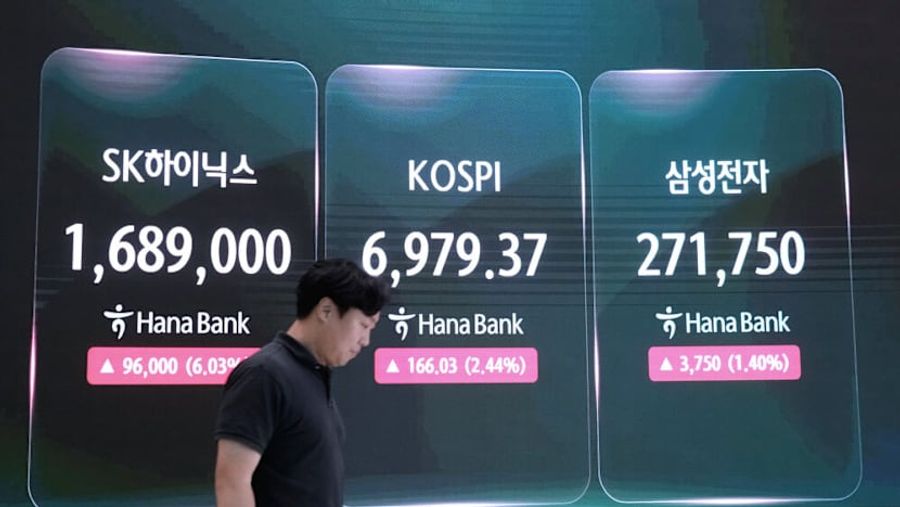
It was a typical Monday morning in Seoul, with the bustling streets of the city's financial district already abuzz with activity. The South Korean stock market, or KOSPI, was about to open for the day, and the air was electric with anticipation. But little did anyone know, this was going to be a day that would shake the very foundations of the market. The KOSPI index, a benchmark that measures the overall performance of the South Korean stock market, was about to embark on a wild rollercoaster ride that would leave investors stunned, bewildered, and questioning the very fabric of the market.
As the opening bell rang, the KOSPI index sprang to life, surging upward by a whopping 5% in the first 30 minutes of trading. Investors, who had been eagerly awaiting this moment, were ecstatic, believing that the market was finally on the mend. But their euphoria was short-lived. Within the next 30 minutes, the index plummeted by 10%, wiping out all the gains made in the first half of the trading session. The market was in chaos, with stocks careening wildly in every direction. Investors were frantically trying to make sense of the madness, while others were desperately trying to salvage what was left of their portfolios.
The extreme volatility of the KOSPI index had become a defining characteristic of the South Korean stock market. Renowned economist Ruchir Sharma, who had been tracking the market's performance, had been warning investors about the dangers of the KOSPI index's wild price swings. Sharma, who had written extensively on the topic, had argued that the index's extreme fluctuations were not only harming investors but also tarnishing the country's global image. "The KOSPI index is a ticking time bomb," Sharma had said in a recent interview. "If it's not addressed, it could have serious consequences for the entire economy."
The KOSPI index's volatility had been a topic of discussion among investors and economists for years. The index's wild price swings were attributed to a variety of factors, including the country's heavily indebted corporate sector, the government's lack of fiscal discipline, and the market's over-reliance on a few large conglomerates. But despite these factors, the market's extreme volatility had continued to defy explanation, leaving many to wonder if there was something more sinister at play.
As the market continued to careen wildly, investors began to question the role of the country's financial regulator, the Financial Supervisory Service (FSS). The FSS had been accused of being too lenient in its oversight, allowing the market to become increasingly reckless. The regulator had also been criticized for its failure to implement effective measures to curb the market's volatility. "The FSS has been asleep at the wheel," said one investor. "They need to take a harder line on the market's excesses."
Despite the market's volatility, the government had remained surprisingly quiet on the issue. The administration had been accused of being too close to the corporate sector, which had been accused of manipulating the market for their own gain. The government's silence had only added to the market's uncertainty, leaving investors to wonder if the administration was truly committed to addressing the issue. "The government needs to take a stronger stance on the market's volatility," said another investor. "They need to show that they're committed to protecting the interests of all investors, not just a select few."
As the market continued to fluctuate wildly, investors began to lose faith in the system. They questioned the wisdom of investing in a market that seemed to be driven by chaos rather than logic. The KOSPI index's extreme volatility had become a national liability, threatening to boil over at any moment. It was a ticking time bomb, waiting to unleash its full fury on the economy.
Also Read

एडिया ने लेंसकार्ट सॉल्यूशंस में 2.01% हिस्सेदारी बेची, ₹2,390 करोड़ कमाए
"अदिया ने अपने शेयरों की 6.45% की बिक्री कर दी है, जिससे सॉफ्टबैंक के बाद इसकी दीवारी में कमी आई है। इसके बाद अब अदिया के पास स्प्रिंगवेल की 3.38% हिस्सेदारी बची है। अदिया ने स्प्रिंगवेल की वैल्यूएशन को 4,000 करोड़ रुपये कर दिया है। यह दीवारी बिक्री स्प्रिंगवेल के
As the dust began to settle on the latest market turmoil, experts weighed in on the issue, offering their perspectives on the KOSPI index's extreme volatility. Dr. Kim, a leading economist at Seoul National University, argued that the market's volatility was a symptom of a deeper problem - the country's over-reliance on a few large conglomerates. "The market is dominated by a few large conglomerates that have too much influence over the market," Dr. Kim said. "This has led to a lack of competition and innovation, which has contributed to the market's volatility."
Renowned economist Ruchir Sharma, who had been warning investors about the dangers of the KOSPI index's wild price swings, argued that the market's volatility was not just a domestic issue but also a global one. "The KOSPI index's extreme fluctuations are not just a problem for South Korea but also for the entire global economy," Sharma said. "If the market continues to be volatile, it could have serious consequences for the entire world."
The government's response to the market's volatility had been criticized by many, including the opposition parties. The opposition had accused the government of being too close to the corporate sector, which had been accused of manipulating the market for their own gain. "The government needs to take a stronger stance on the market's volatility," said Lee, a spokesperson for the opposition party. "They need to show that they're committed to protecting the interests of all investors, not just a select few."
As the market continued to fluctuate wildly, investors began to question the wisdom of investing in a market that seemed to be driven by chaos rather than logic. The KOSPI index's extreme volatility had become a national liability, threatening to boil over at any moment. It was a ticking time bomb, waiting to unleash its full fury on the economy.
The socio-economic impact of the KOSPI index's extreme volatility had been significant. Many small investors had lost their life savings in the market's wild price swings, leaving them with little to no financial security. The market's volatility had also had a devastating impact on the country's economic growth, with many businesses struggling to access credit and investment. "The market's volatility has had a devastating impact on the economy," said one business owner. "It's made it impossible for us to access credit and investment, which has left us struggling to stay afloat."
As the market continued to careen wildly, investors began to wonder what the future held. Would the government take a stronger stance on the market's volatility, or would it continue to remain quiet? Would the market's extreme fluctuations continue to drive investors away, or would it attract new investors looking for a high-risk, high-reward opportunity? The answers to these questions remained uncertain, but one thing was clear - the KOSPI index's extreme volatility had become a national liability, threatening to boil over at any moment.