Indian Researchers, Students Get Berlin Stage to Showcase Innovation
In a boost to India's innovation landscape, Commerce and Industry Minister Piyush Goyal met with Indian researchers and students in Berlin, Germany, to discuss their contributions to the country's vision for Viksit Bharat. Goyal encouraged the group to continue their groundbreaking work, assuring them that their efforts would be supported.
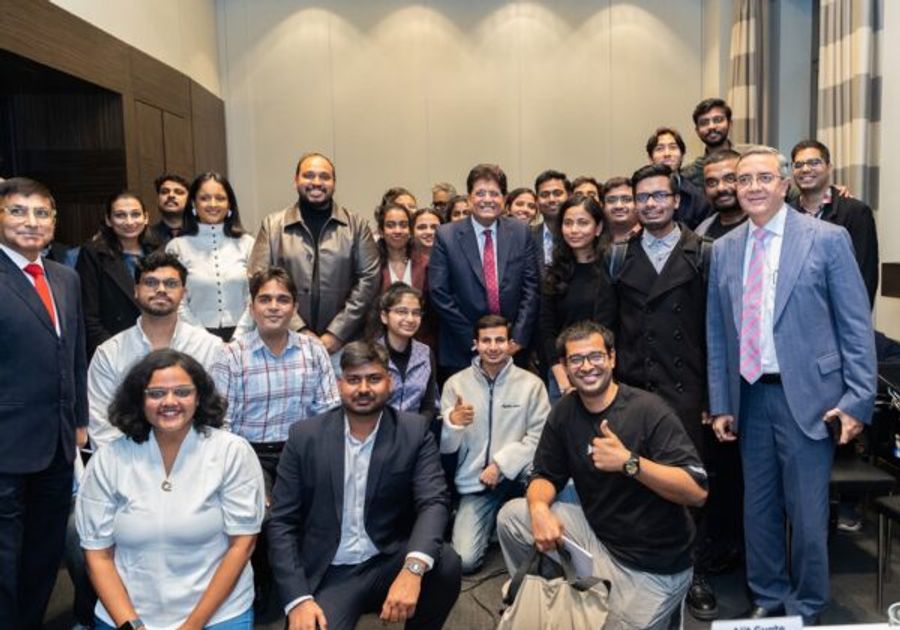
The streets of Berlin, once a hub for revolutionary thinkers and avant-garde artists, now played host to a different kind of revolution – one of innovation and intellectual curiosity. It was a chilly winter morning when a delegation of Indian researchers and students arrived at the Indian Embassy, their minds buzzing with excitement and anticipation. They were about to embark on a journey that would showcase their groundbreaking work to the world, and their presence was no mere coincidence. Commerce and Industry Minister Piyush Goyal was scheduled to meet with them, and the stakes were high.
For Dr. Rohan Jain, a young researcher from the Indian Institute of Technology, Delhi, this was a moment of a lifetime. His team had spent years working on a project that could potentially change the face of rural India's healthcare system. Their innovation – a low-cost, portable device that could diagnose diseases with unprecedented accuracy – had garnered international attention, and now they were about to present it to the Minister himself. The weight of responsibility was palpable, but Dr. Jain's confidence was unwavering. He knew that this was not just about showcasing his work, but about being part of something bigger – a movement that was redefining India's innovation landscape.
As the Minister arrived, the room was abuzz with activity. Researchers and students alike were nervous but determined, their faces set with a mix of excitement and trepidation. The Minister's words of encouragement were music to their ears – he spoke of a vision for Viksit Bharat, a vision that was built on the pillars of innovation, entrepreneurship, and collaboration. He assured them that their efforts would be supported, and that the government was committed to creating an ecosystem that would nurture and foster their growth. The room erupted in applause, a sense of validation and empowerment washing over the delegation.
But this was not just about the Minister's words; it was about the tangible results that his government had achieved in recent years. The establishment of programs like the Atal Innovation Mission and the Startup India initiative had created a buzz around innovation, and had provided a platform for researchers and entrepreneurs to showcase their work. The Minister's visit to Berlin was a testament to the government's commitment to taking Indian innovation to the global stage, and the researchers and students were the frontline warriors in this battle.
As the meeting drew to a close, the delegation was presented with an opportunity to showcase their work to a global audience. The Indian Embassy had arranged for a special exhibition, where researchers and students would be able to present their projects to a diverse group of stakeholders, including entrepreneurs, investors, and policymakers. The stakes were high, but the potential rewards were immense – this was a chance to get their foot in the door, to network with the right people, and to potentially secure funding and support for their projects.
The days that followed were a whirlwind of activity, with researchers and students presenting their projects to a packed audience. The exhibition was a resounding success, with many of the projects generating significant interest and attention. Dr. Jain's team, for instance, received several offers of funding and support, and their device was hailed as a game-changer in the field of healthcare. The delegation's hard work had paid off, and they had taken a significant step towards realizing their vision of a better India.
Also Read

यूएन के 81वें संयुक्त राष्ट्र दिवस पर भारत के विदेश मंत्री ने मुल्तिवार्ता प्रणाली को पुनर्जीवित
भारतीय विदेश मंत्री एस. जयशंकर ने शनिवार को 81वें संयुक्त राष्ट्र दिवस पर संयुक्त राष्ट्र (यूएन) और इसके संस्थापक चार्टर के प्रति भारत के स्थायी संकल्प को फिर से पुष्टि किया। जयशंकर ने एक नए युग के अनुकूल वैश्विक वास्तविकताओं को प्रतिबिंबित करने वाले सुधारित बहुराष्ट्रीयवाद की आवश्यकता पर बल
As the delegation prepared to leave Berlin, they were filled with a sense of pride and accomplishment. They had showcased their work to the world, and had received validation and support from the Minister himself. But they knew that this was just the beginning – they had to continue working tirelessly to take their innovations to the next level. The government's support was a crucial step in this journey, but it was up to them to deliver the results. The question on everyone's mind was – what's next?
---
The Minister's visit to Berlin was a significant development in India's innovation landscape, and its impact was felt far and wide. The government's commitment to supporting researchers and students was a crucial step in creating an ecosystem that would nurture and foster innovation. But the journey ahead was not without its challenges – the government would have to work closely with the research community to ensure that the right support structures were in place, and that the innovation ecosystem was sustainable in the long term.
Dr. Nalini Menon, a leading expert on innovation policy, was cautiously optimistic about the government's plans. "The Minister's visit to Berlin was a positive development, but we need to see concrete action on the ground," she said. "We need to create an ecosystem that is supportive of innovation, and that provides the right incentives for researchers and entrepreneurs to take risks and push the boundaries of what is possible." She pointed out that the government's initiatives, while laudable, were still in their infancy, and that more needed to be done to create a level playing field for researchers and entrepreneurs.
The socio-economic impact of the government's initiatives was also a critical factor to consider. The Minister's vision for Viksit Bharat was built on the assumption that innovation would drive growth and create jobs, but the reality was more complex. Researchers and entrepreneurs would need to be supported in their efforts to create products and services that were relevant to the needs of the Indian market, and that could be scaled up to achieve significant impact. The government would need to work closely with the private sector to create a ecosystem that was conducive to innovation, and that provided the right incentives for investment.
The economic implications of the government's initiatives were also significant. The Minister's visit to Berlin was seen as a significant step in taking Indian innovation to the global stage, and the potential rewards were immense. Indian companies were already making significant inroads into global markets, and the government's initiatives could provide a further boost to this trend. But the economic impact would depend on a range of factors, including the success of the innovation ecosystem, the level of investment in research and development, and the ability of Indian companies to scale up their operations.
The future outlook for Indian innovation was bright, but it was not without its challenges. The government would need to continue to support researchers and entrepreneurs, and create an ecosystem that was conducive to innovation. The private sector would need to play a critical role in driving growth and creating jobs, and the government would need to work closely with them to create a level playing field. The Minister's visit to Berlin was a significant step in this journey, but it was just the beginning – the real work lay ahead.