War Conditions Test Citizen Rights Amid Curfew and Restrictions
Wartime conditions often impose curfews, censorship, and restrictions on citizens' fundamental rights. This situation raises critical questions about the balance between national security and civil liberties during conflict.
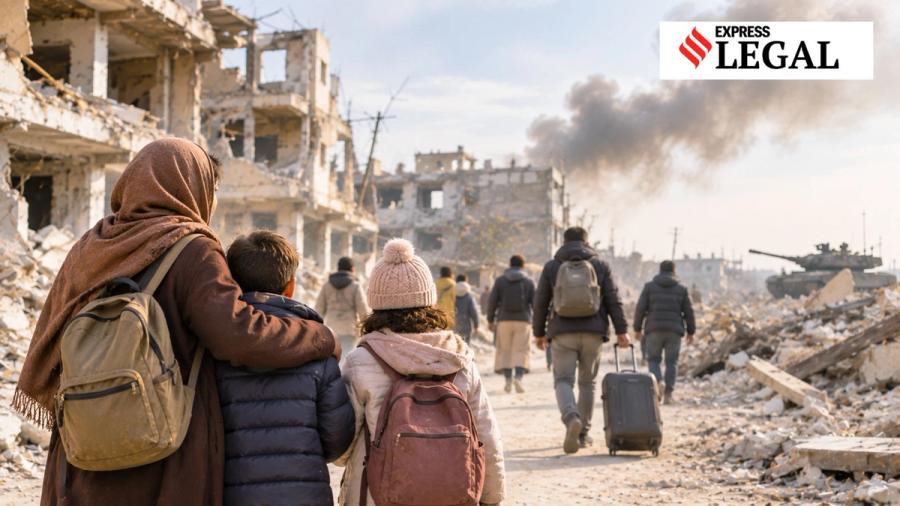
The recent escalation of hostilities in the border regions has thrust the nation into a state of heightened security, triggering widespread curfews and stringent communication controls across affected districts. These measures, implemented citing national security imperatives, have significantly curtailed the daily lives and fundamental rights of ordinary citizens. The imposition of curfews restricts movement, impacting essential services and livelihoods, while the enforced censorship limits the public's access to verified information, creating an environment of uncertainty.
This situation is not unprecedented, yet it demands rigorous scrutiny against the backdrop of constitutional guarantees. In times of conflict, the tension between the state's duty to protect its citizens and the protection of civil liberties becomes acutely visible. While governments possess the authority to take extraordinary measures during emergencies, these powers are not absolute and must adhere to established legal frameworks to prevent arbitrary rights infringement.
The background context reveals that similar restrictions have been deployed in past periods of internal and external conflict. However, the current implementation raises concerns about proportionality and transparency. Citizens are finding it increasingly difficult to navigate essential needs—medical care, food supply, and legal recourse—amidst the restrictions.
The impact extends beyond mere inconvenience; it touches upon the very fabric of democratic life. When fundamental rights like freedom of assembly, movement, and expression are curtailed under the guise of war, the balance shifts precariously. Ensuring that wartime necessities do not become an excuse for authoritarian overreach is the critical challenge facing the nation as the conflict continues.
Also Read
माडगूळकर बंधूंच्या कथा मानवी संवेदनांचे चित्रण करतात
माडगूळकर बंधूंच्या कथांमधून मानवी संवेदनांचा हळवा जागर झाला. लिट-फेस्टमध्ये नसीरुद्दीन शाह यांच्या वक्तव्याने सामाजिक विषयांवर लक्ष वेधले.
The imposition of curfews, heightened censorship, and restrictions on movement during wartime fundamentally shifts the operational landscape for individual rights. While national security imperatives are acknowledged as legitimate during active conflict, the scope and duration of these restrictions become critical points of legal and ethical scrutiny. International humanitarian law outlines parameters within which states can limit freedoms, demanding proportionality and necessity in any curtailment of civil liberties, ensuring that emergency measures do not become permanent instruments of control.
The potential impact extends across social, economic, and political spheres. Curfews disrupt daily livelihoods, affecting small businesses and essential services, while censorship can impede the free flow of information necessary for informed public discourse and accountability. This environment risks eroding public trust in governance if the measures are perceived as arbitrary or excessively punitive rather than strictly defensive. The long-term consequence involves setting precedents for state power that can linger long after the immediate threat subsides, challenging the constitutional guarantees of a civilian population.
Moving forward, the focus must remain on the mechanisms of oversight. Key areas to monitor include the judicial review process applied to emergency decrees, the transparency surrounding the implementation of censorship—specifically what information is being withheld and on what grounds—and the timeline for the gradual dismantling of wartime restrictions. International human rights monitoring bodies will play a crucial role in assessing compliance with international law. The balance between safeguarding the nation and protecting the fundamental dignity and rights of its citizens remains the defining challenge in such volatile periods.